
- Top
- Investor Relations
- IR Library
- Management Report (Integrated Report)
- Message from the Chair of the Sustainability Committee
Message from the Chair of the Sustainability Committee

Reaffirming 7-Eleven’s reason for being and driving our transformation
Junro ItoRepresentative Director & Executive Chair
Ambition and evolution for the next 100 years
After the Annual Shareholders’ Meeting held in May 2025, I was appointed representative director and executive chair. Then, in June, I was appointed as chair of the Sustainability Committee, one of the three committees involved in internal control resolutions.
In September of the same year, the Group transitioned to a new structure focusing on its CVS business. This has prompted us to reexamine what 7-Eleven is, what value we want to provide in the future, and how each of us should act to achieve this goal, and we have launched a global-level project to accelerate our growth while continuing to build on the strengths we have developed over the years.
The 7-Eleven brand, born in the United States, will celebrate its 100th anniversary next year, in 2027. As we approach this milestone, remind ourselves of our Corporate Creed—being a sincere company that our stakeholders trust—and will continue to take on the challenge of constantly working toward the Transformation of 7-Eleven as we have set out.
In the 100 years to come, our stores, merchandise, and services may take on a very different form than they have in the past. However, our commitment to supporting the enrichment of our customers’ daily lives and providing new experiential value remains unchanged. We will continue to provide safe, high-quality, and excellent merchandise and services to our customers, thereby enhancing our social value and corporate value, which will lead to returns to our shareholders.
Our approach to sustainability:
Always maintaining a presence of trust and good faith
The late, famed management scholar Peter F. Drucker, known as the father of management, once said,
“Profit for a company is like oxygen for a person. If you don’t have enough of it, you’re out of the game. But if you think your life is about breathing, you’re really missing something.”
These words offer an important insight into the nature of sustainability. For us retailers, responding quickly to the ever-changing needs of our customers and pursuing sales and profits are essential to the survival of our Company. However, our reason for being is not limited to simply pursuing profits. Our mission is to contribute to the prosperity of local communities and build a sustainable future together with society.
The prosperity of local communities forms the foundation of our business and the source of our growth. We believe that our sustainability as a company will be realized when we gain resonance from our customers, become loved by them, and be accepted as a member of local communities.
Resolving social issues through business activities
In order to achieve sustainable growth for both society and our Group, it is essential to resolve social issues through our business activities. However, management resources are finite and cannot address all social issues. This is why the Group has identified seven material issues to be prioritized within the pool of social issues in Japan and other countries, and is implementing specific measures after clarifying risks and opportunities.
One successful result of these measures is the complete recycling of polyethylene terephthalate (PET) bottles, in which these bottles collected at the Group’s stores are recycled into PET bottles used in proprietary merchandise. In August 2024, we also established Seven & i Energy Management Co., Ltd. as a retail electricity provider, efficiently supplying renewable energy to Group stores.
Furthermore, the cumulative number of participants in SMiLE, a business plan contest for resolving social issues launched in 2022, has reached more than 1,500, leading to many proposals for new business plans. These are aimed at creating new businesses that solve the inconvenience, dissatisfaction, and unease of customers and society, as well as resolving material issues. Going forward, we will continue to strive to foster a corporate culture that respects and stimulates innovation.
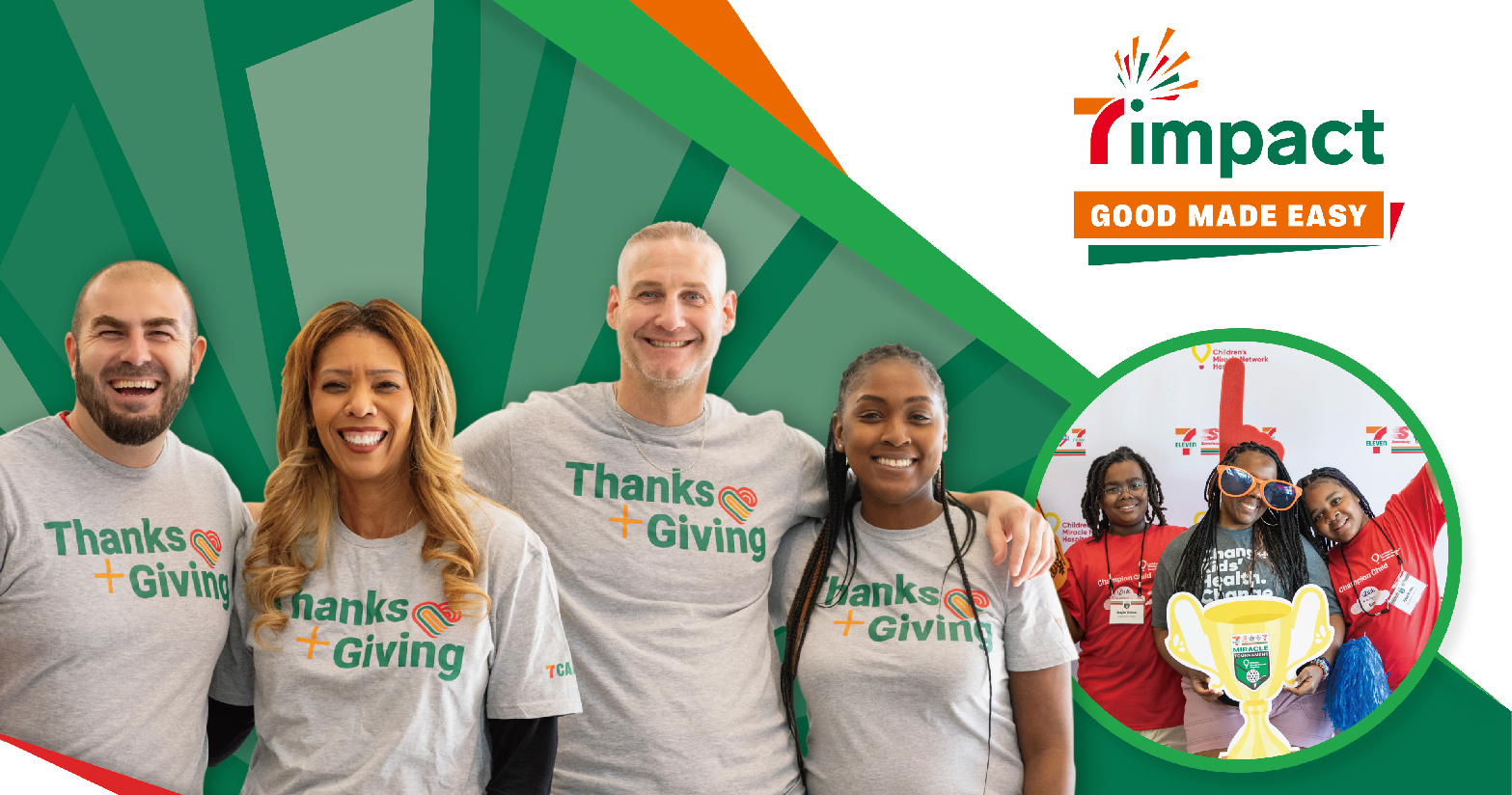
As for our operating companies, SEJ has formulated “Build a joyful future, together” as its purpose, which it strives to achieve through four visions regarding health, community, environment, and human resources under the mission of “Unlocking the next doorway convenience.” Similarly, SEI’s approach is called 7impact “Good Made Easy.” Those three simple words encapsulate its strategy to build thriving communities, protect the environment and promote responsible consumption.
Revision of material issues (Materiality)
In 2014, the Seven & i Group identified material issues to be addressed by the Group as a whole in order to meet the expectations and demands of our stakeholders as we strive toward the sustainable development of society and sustainable growth of the Company. Subsequently, we revised these issues through the six-step process below in March 2022, to reflect developments such as changes in the Group’s business environment and globalization of our core CVS operations. We then announced seven material issues internally and externally.
Six revision steps
STEP ① Selection of social issues in Japan and other countries
We identified 480 social issues reflecting inputs including the SDGs, the World Economic Forum’s Global Risks Report, and evaluation items used by ESG rating agencies, as well as external environmental changes.
STEP ② Survey of more than 5,000 stakeholders
We selected 35 items that we believe are relevant to our business and conducted a survey of customers, suppliers, shareholders and investors, and 7-Eleven franchise store owners and employees.
STEP ③ Dialogue with experts
Group management engaged in dialogue with experts knowledgeable on a wide range of sustainability topics, to exchange opinions on the social issues that the Seven & i Group should address.
STEP ④ Identification of material issues reflecting diverse voices
Seven priority issues were identified, referring to the degree of importance to stakeholders and the Company, survey comments, dialogue with experts, and interviews with management of operating companies.
STEP ⑤ Risks and opportunities related to material issues
We consolidated risks and opportunities related to material issues, to create new initiatives and reduce risks.
STEP ⑥ Formulating action plans
We formulated concrete initiatives to contribute to solutions to material issues through each operating company’s business.
Characteristics of our material issues
In making the revisions, we surveyed more than 5,000 stakeholders, including those outside Japan, and reviewed and analyzed more than 1,000 comments.
In addition, specific action plans were also formulated to ensure feasibility so that each operating company can promptly implement measures to resolve material issues.
Revision of material issues in the transformation of the Group
With the transition to a new structure that focuses on our CVS business, we plan to revise our key priorities. We aim to identify material issues that are more closely linked to management strategies, taking into account their relevance to our CVS business and further global expansion.
Seven materiality issues (Materiality)
| Examples of concrete initiatives to address issues | Risks | Opportunities |
|---|---|---|
|
1 Create a livable society with local communities through various customer touchpoints
|
||
|
Management that aims to address community issues including an aging and decreasing population
|
|
|
|
2 Provide safe, reliable, and healthier merchandise and services
|
||
|
Support for an abundant and safe society
|
|
|
|
3 Realize decarbonization, circular economy, and society in harmony with nature, through environmental efforts
|
||
|
Environmentally friendly management
|
|
|
|
4 Achieve a society in which diverse people can actively participate
|
||
|
Realizing a society that accepts diverse values and lifestyles
|
|
|
|
5 Improve work engagement and environment for people working in Group businesses
|
||
|
Becoming a company that provides job satisfaction and sense of accomplishment
|
|
|
|
6 Create an ethical society through dialogue and collaboration with customers
|
||
|
Working with customers to make communities thrive
|
|
|
|
7 Achieve a sustainable society through partnerships
|
||
|
Working with business partners to achieve a thriving society
|
|
|
Integrating management and sustainability
As the term “global boiling” suggests, climate change is becoming more serious on a global scale and is beginning to have a direct impact on business activities. With record high temperatures being constantly broken, we are seeing the manifestation of risks where reduced raw material yields make it difficult to provide coffee, onigiri (rice balls), and other items with great taste, as well as reduced customer traffic due to extreme heat and extreme weather conditions. In addition, it has become clear that heightened geopolitical risks can lead to supply chain fragmentation, affecting the lives of our customers and our business.
We believe that anticipating these major changes and identifying medium- to long-term risks and opportunities with an eye to their impact on business 10 to 20 years from now is the foundation of sustainable management. Therefore, the Group aims to strengthen the resilience of its business by quickly initiating risk mitigation measures and to achieve sustainable growth by making the most of the opportunities identified and incorporating them into its management strategy. We are convinced that integrating management and sustainability in this way is the key to increasing the competitiveness of the Company for the future.
Formulation of the Sustainability Strategy Map
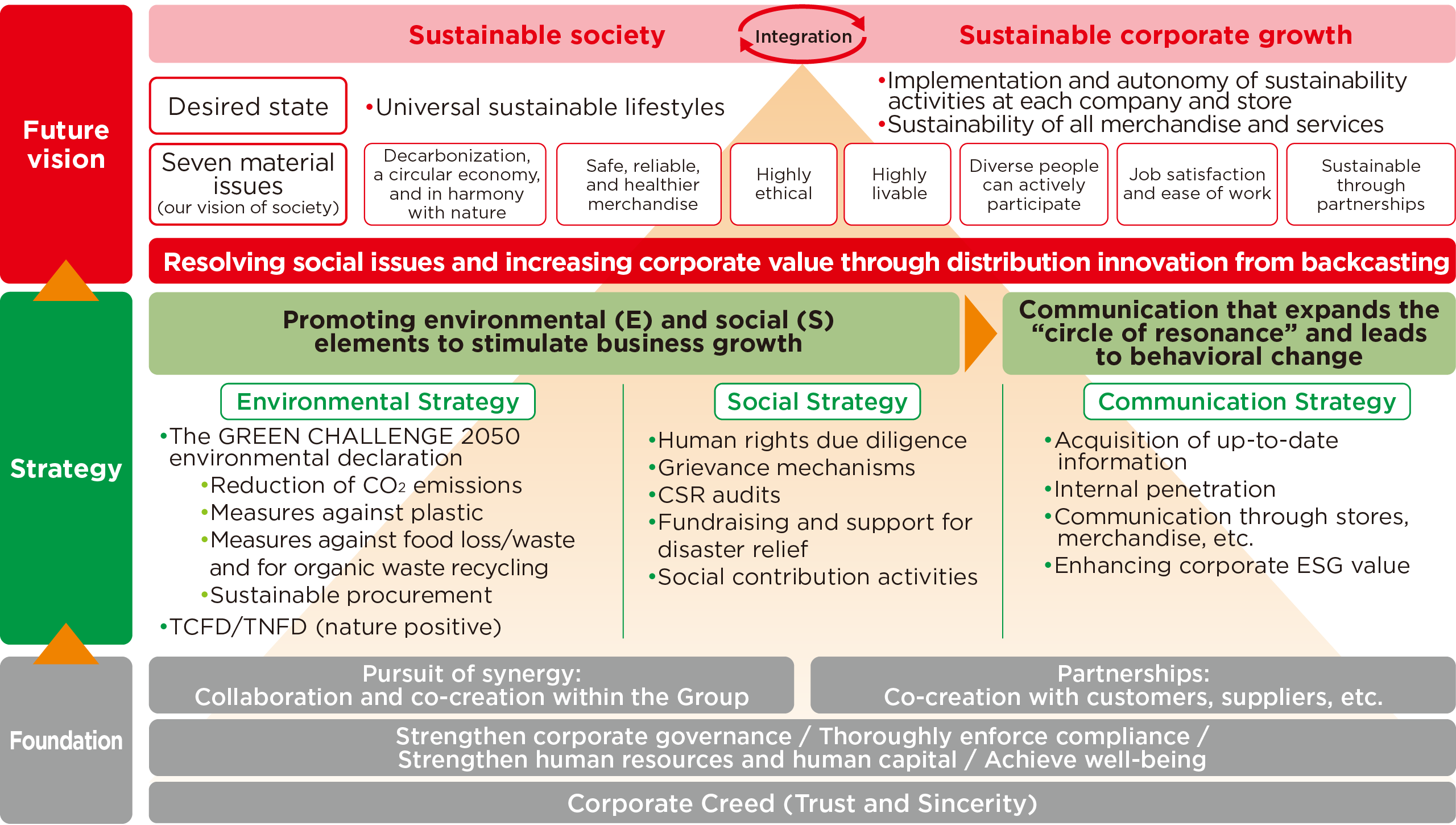
In FY2024, we formulated the Sustainability Strategy Map. This map is a systematic summary of our foundation, strategies, and goals to realize the vision of society that we developed in the process of identifying material issues, and to achieve both a sustainable society and sustainable corporate growth. We will stimulate sustainable business growth through the implementation of our Environmental Strategy and Social Strategy, and at the same time, will work together to create a more secure, comfortable, and sustainable society by evoking resonance from our stakeholders through our Communication Strategy, which will lead to behavioral change.
Main measures in FY2024 and in FY2025 through September
Publication of the “CLIMATE and NATURE Disclosures”
In October 2024, we formulated the Seven & i Holdings Nature Policy to clarify our stance toward the realization of a nature positive* state. In September 2025, we issued an integrated report based on the TCFD and TNFD, which also estimates the financial impact of climate and nature-related risks and includes measures to address them. We will maintain efforts to promote integrated and strategic environmental measures, taking into account the interrelationships and mutual effects between environmental issues, as well as the perspective of resource recycling.
* To stop and restore loss of biodiversity
Social contribution activities with a view to global collaboration
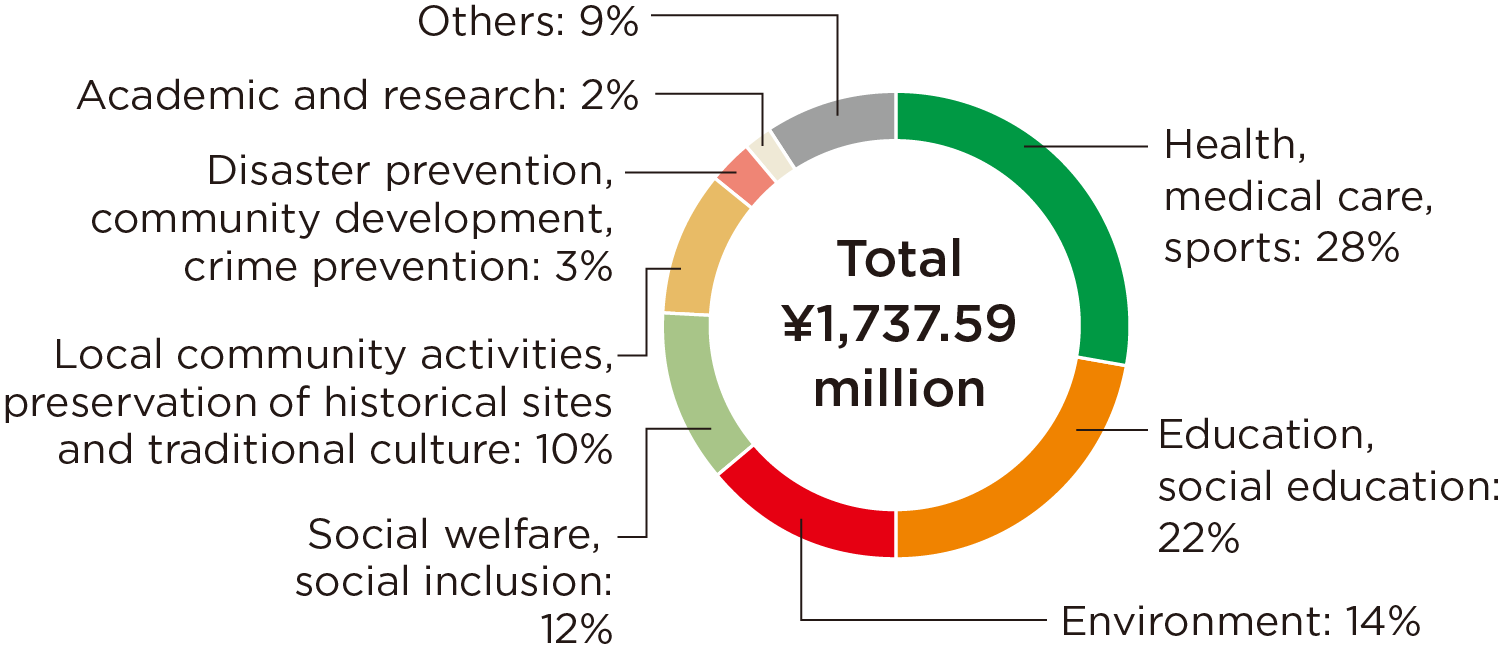
As the Group supports the operations of approximately 86,000 7-Eleven stores worldwide, we are strongly aware of the importance of social contribution activities to help local communities. Therefore, we are engaged in various initiatives for education, social welfare, the environment, and disaster relief around the world. Social contribution activity expenses for the eight Group companies worldwide exceeded ¥1.73 billion, or approximately 1.0% of the Group’s net income attributable to owners of parent for the fiscal year ended February 28, 2025.
We also conduct fundraising activities in our stores, on our website, and at charity events. The donations received from our many stakeholders are used to provide assistance to those in need through government agencies, NPOs, NGOs, and others. In FY2024, we raised approximately ¥3.06 billion in donations.
To visualize the social impact of our sustainability activities, SEI and 7IN publish an Impact Report.
We are currently surveying the status of activities in each region, and will continue our social contribution activities with a view to global collaboration in the future.
2024 7-Eleven Impact Report.pdf (SEI)[PDF:185MB]
Impact Report 2024.FINAL (7IN)[PDF:59.4MB]
Revision of business continuity plan
We have formulated a business continuity plan (BCP) to minimize the impact on our business in the event of a major disaster and to ensure that we can continue to operate our stores and provide services and fulfill our role as a social infrastructure that supplies merchandise essential to our customers’ lives.
In FY2024, we made major revisions to our BCP and implemented business continuity management activities, including education for employees and verification and review of the plan through training.
Development and implementation of an employee app

Based on the idea that understanding and practice by employees are essential to creating behavioral change in society as a whole, in March 2024, we developed the “Sasutena Smile App” for employees to learn about environmental and social issues while having fun and developing good habits toward resolving these issues. Points are awarded for sustainability activities, resulting in donations to the 7-Eleven Foundation. The app is popular not only for providing basic knowledge and important information on sustainability, but also for its ability to check the activities of each company within a single app. The number of registrations is growing steadily, building the circle of “smiles” wider and wider.
Toward behavioral change in society
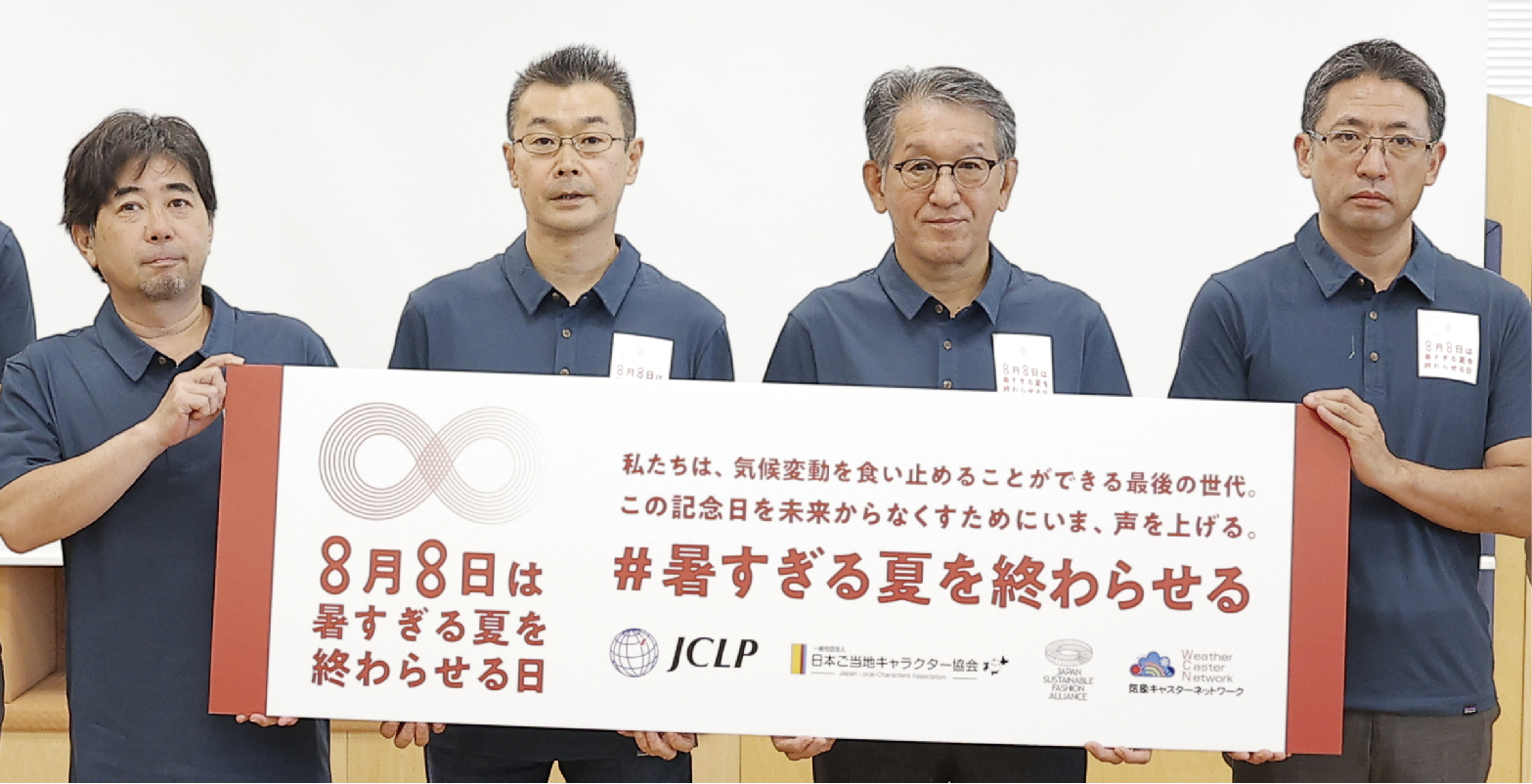
In August 2025, as a participating company in the Japan Climate Leaders’ Partnership (JCLP), we endorsed the establishment of the “Day to End Too Hot Summer.” The head of our Sustainability Development Office, acting as one of the JCLP executive members, addressed the press conference on our endorsement and expressed our desire to create an opportunity to rethink heat as a climate change issue, to stop the climate crisis for the sake of future generations, and to use this as a starting point to transform the entire social system.
Going forward, the Group will continue to work with its various stakeholders to resolve social issues through its business activities, aiming for sustainable growth of society and the Company as a group that is indispensable to the lives of its customers around the world.