- Top
- Sustainability
- Climate and Nature-related Information Disclosures —Responses to TCFD/TNFD Recommendations
Climate and Nature-related Information Disclosures —Responses to TCFD/TNFD Recommendations
On Monday, September 8, 2025, we published the "CLIMATE and NATURE Disclosures, integrated report based on TCFD/TNFD recommendations," summarizing our response to climate change and nature.
1. Approach to Climate Change and Nature
Seven & i Holdings (the “Company”) and its consolidated subsidiaries (the “Group”) promote initiatives by establishing Material Issue 3: “Realize decarbonization, circular economy, and society in harmony with nature, through environmental efforts.” Specifically, in the GREEN CHALLENGE 2050 environmental declaration, we set goals and visions for 2030 and 2050 in four areas—reduction of CO2 emissions, measures against plastic, measures against food loss and for organic waste recycling, and sustainable procurement —and we are taking action related to climate change and nature.
Regarding climate change, we have supported the TCFD since 2019, began analysis based on TCFD recommendations, and have been disclosing information. Also, regarding nature, we joined the TNFD Forum in January 2023, registered as a TNFD Adopter in March 2024, and made our first disclosure based on the TNFD recommendations in September 2024.
Recognizing that the climate change and nature mutually influence one another and that it is essential to acknowledge this relationship and respond to it in an integrated manner, in September 2025, we published the “CLIMATE and NATURE Disclosures, Integrated report based on TCFD/TNFD recommendations,” which analyzes and discloses information regarding both topics in an integrated manner in an effort to provide information disclosures that are comprehensible to our stakeholders.
●Formulation of Nature Policy
In October 2024, we reaffirmed our existing approach and initiatives regarding nature and biodiversity, and formulated the Seven & i Holdings Nature Policy to make clear the Group's proactive approach to achieving nature-positive results. In formulating this policy, steps that the Group will take to achieve nature positive have been compiled based on the AR3T framework (Avoid, Reduce, Restore, Regenerate, and Transform) outlined in the SBTs for Nature*.
* SBTs for Nature: Science-based and nature-related targets. Refers to a framework and technical guidance that encourage companies and cities to set nature-related targets that are science-based
Seven & i Holdings Nature Policy (Main points)
- 1We strive to understand our relationship with nature
- 2We value nature and strive to avoid and/or minimize negative impacts on nature
- 3We contribute to the recovery, restoration, and regeneration of nature and biodiversity
- 4We embrace innovation and co-create value with all stakeholders to contribute to nature
- 5We value highly transparent, trustworthy, and sincere disclosure and reporting
2. Governance
The Company implements initiatives, including those relating to climate change and nature, under the supervision of the Board of Directors and through the Sustainability Committee, which is chaired by the Representative Director & Executive Chair, and its subcommittees (as of September 2025).
3. Risk and Impact Management
In accordance with the basic rules for risk management, the Group established, developed, and operates a comprehensive risk management system, centered on the Risk Management Committee. Risks related to sustainability are managed under this comprehensive risk management system as well.
4. Strategy
(1)Analysis Assumptions
Based on the following assumptions, we analyzed both risks and opportunities relating to climate change and nature and investigated response measures.
| Item | Category |
Details |
| Scope of disclosure | Climate |
Conduct scenario analyses for domestic convenience store operations (domestic CVS operations) and overseas convenience store operations (overseas CVS operations), including the direct physical impacts on stores, costs incurred for store operations, merchandise supply chains (raw materials, factories that manufacture merchandise, merchandise shipping, etc.) that significantly affect store operations, and customer behavior, and disclose climate change risks, opportunities, and countermeasures that are identified. |
| Nature | Evaluate the relationship between the Group's businesses and nature, and as the Group operates businesses focused on food, disclosure for this evaluation to cover risks, opportunities, and countermeasures related to agricultural products. | |
| Scenarios | Climate |
Two scenarios, a decarbonization scenario (1.5°C to 2.0°C) and a warming scenario (2.7°C to 4.0°C), have been set with reference to future forecast reports issued by governments and international organizations, including STEPS, APS, and NZE2050, indicated in the World Energy Outlook of the International Energy Agency (IEA). Business growth rate as of 2030 to be taken into account.
●Decarbonization scenario (1.5℃ to 2.0℃) A world assumed in which various laws and regulations have been introduced toward achievement of the 1.5°C target, whereby the cost of compliance with these laws and regulations increases store operations costs and requires a diversification of our portfolio.
●Warming scenario (2.7℃ to 4.0℃) A world assumed in which the frequency and severity of natural disasters rise and weather patterns change significantly, with potential to result in damage to stores and other facilities, impact procurement of raw materials, and increase air-conditioning costs in stores due to higher temperatures. |
| Nature | Of the two scenarios presumed in the TCFD analysis, multiple external environment patterns falling within the range of the "Warming scenario (2.7°C to 4.0°C)" were assumed. | |
| Time horizons | Climate | Based on the impact expected in 2030, which is the interim target-setting period for GC2050, risks, opportunities, and countermeasures were examined. In case of overseas CVS business, short-term (0 to 5 years), medium-term (5 to 10 years), and long-term (10 to 30 years) timeframes were applied to the analysis. |
| Nature | In order to grasp the long-term trends that will determine the success or failure of procurement, the period covered will be set to 2050, the time horizon when risks and opportunities will become apparent, and specific countermeasures will be considered with a short-term target of 2030–35, the same period as the TCFD analysis. |
(2)Climate Change and Nature-related Risks and Opportunities
The climate change and nature-related significant risks and opportunities identified through the analysis are as follows:
●Significant risks identified
| Risk classification | Category | Type | Assumed scenario | Significant risks identified | |
| Physical risks | Acute | Climate | Direct operations | Warming scenario | ・Increased frequency and intensity of severe natural disasters, resulting in store damage, merchandise damage, supply chain disruptions, blocked store access, lost in sales due to store closures, and increased losses due to restoration costs and others |
| Climate | Raw materials | ・Disruptions in the supply chain due to changes in precipitation and weather patterns, an increase in water-related risks within the supply chain, and a rise in product costs caused by reduced harvest yields of raw materials | |||
| Chronic | Nature | Raw materials | ・Increases in procurement and labor costs due to longer working hours for our procurement staff and higher costs of raw materials for merchandise caused by reduced yields and quality due to changes in precipitation and weather patterns, and outbreaks of pests and diseases | ||
| Transition risks | Policy | Climate | Direct operations | Decarbonization scenario | ・The global introduction of emissions regulations and carbon pricing, such as carbon taxes, resulting in a cost burden for CO2 emissions from store operations and increased costs in the supply chain that will affect products and other items |
| Climate | Direct operations | ・Overseas CVS operations: Increase in costs related to Extended Producer Responsibility (EPR) due to product waste regulations (medium-term) | |||
| Market | Climate | Direct operations | ・An increase in electricity costs due to higher retail prices from renewable energy adoption and other factors | ||
| Climate | Direct operations | ・Overseas CVS operations: Especially in the decarbonization scenario, lower demand for petroleum-based fuels owing to changing consumer preferences, adoption of new technologies, and improved fuel efficiency, resulting in a decrease in revenues from petroleum-based fuels (long-term) | |||
| Climate | Direct operations | Warming scenario | ・An increase in air conditioning operation costs and refrigeration equipment operation costs due to global temperature rise | ||
| Reputational |
Climate Nature |
Direct operations | ・Procurement shortages and lower quality of raw materials caused by climate change will impede quality assurance of merchandise and lead to a decline in brand value and customer satisfaction | ||
| Nature | Raw materials | ・Decrease in sales due to reputational risk arising from procuring raw materials with lack of consideration for the environment or human rights (e.g., deforestation, environmental destruction of land, infringement of the rights of indigenous peoples and local residents, child labor, forced labor, etc.) | |||
| Liability | Nature | Direct operations |
・Increased costs of complying with nature-related or/and environment regulations, fines and penalties due to insufficient compliance |
||
●Significant opportunities identified
| Opportunity classification | Category | Type | Assumed scenario | Significant opportunities identified | |
|
Business performance |
Market | Climate | Direct operations |
Warming scenario |
・Customers seldom going out during summer season due to high temperatures, which will boost demand for delivery and e-commerce services |
| Nature | Raw materials | ・Development of new markets by utilizing sustainable alternatives and developing new merchandise that use different varieties | |||
|
Market Reputational |
Climate Nature |
Direct operations | Decarbonization scenario | ・Increase in consumer interest for sustainable merchandise and services | |
|
Market Reputational Resource efficiency |
Climate | Direct operations |
Decarbonization scenario Warming scenario |
・Increased demand for EV charging due to tighter regulations and changing consumer preferences | |
| Nature | Raw materials | ・Establishment of a stable supply system by increasing direct transactions with farmers and building long-term partnerships | |||
| Climate | Direct operations | Decarbonization scenario | ・Overseas CVS operations: Reduction in overall energy use by investing in measures to improve energy efficiency (medium-term) | ||
|
Sustainability performance |
Resource efficiency Use, preservation, restoration and regeneration of natural resources |
Nature | Raw materials |
Warming scenario |
Support for farmers in adopting regenerative agriculture and other practices to conserve biodiversity so as to improve ecosystem services as well as improve and stabilize the yield and quality of raw materials |
(3)Climate Change
1. Climate Change-related Risks, Opportunities and Financial Impact
We performed scenario analysis covering Seven-Eleven Japan (SEJ) from FY2019 to FY2021 and 7-Eleven Inc. (SEI) in FY2023 to identify the 12 significant risks and opportunities described above in “Significant risks and opportunities identified.” Among the identified risks, under the decarbonization scenario, imposition of carbon taxes was recognized as a risk with a significant financial impact, and under the warming scenario, damage from natural disasters and rising raw material costs were recognized as particularly large financial impacts in 2030.
●Estimation of financial impact
・Decarbonization scenario: Imposition of carbon taxes
|
¥27.7 billion |
・Carbon tax amount: $135/ton-CO2 (maximum amount anticipated in the IEA’s World Energy Outlook 2022) ・Foreign exchange rate: ¥150/$ (approximate exchange rate as of February 28, 2025) * Breakdown of ¥27.7 billion: domestic CVS operations ¥14.4 billion, overseas CVS operations ¥13.3 billion |
・Warming scenario: Damage from natural disasters (SEJ)
|
¥11.19 billion |
・Estimate of flood damage to SEJ stores in the Tokyo metropolitan area (assuming flooding of the Arakawa River) ・Estimated based on past flooding damage. To determine the scale of the damage, the estimated amount was calculated without taking into account the application of insurance. |
・Warming scenario: Rising raw material costs (SEJ)
|
¥5.7 billion |
・Estimation of rise in costs due solely to lower yields resulting from climate change ・The covered resources (rice, laver, and livestock products (beef, pork, chicken, and eggs)) were selected based on the SEJ’s procurement amount composition * Breakdown of ¥5.7 billion: Rice ¥2.23 billion, laver ¥1.93 billion, livestock products (beef, pork, chicken, and eggs) ¥1.54 billion |
2. Responses to Climate Change-related Risks and Opportunities
We investigated response measures regarding the identified 12 significant risks and opportunities in order to mitigate risks and maximize opportunities.
Through these investigations, we were able to confirm that the environmental impact reduction measures being carried out based on GREEN CHALLENGE 2050 are effective measures in both the decarbonization scenario and the warming scenario.
●Significant countermeasures
| Scenario |
Countermeasures (examples) |
Examples of concrete initiatives |
| Decarbonization scenario |
・Promote measures to reduce CO₂ emissions in accordance with the GREEN CHALLENGE 2050 environmental declaration (aiming for a 50% reduction in 2030 from the FY2013 level and net-zero emissions in 2050)
・Promote initiatives and investments to save energy and improve energy efficiency in store
・Aggressively increase the percentage of renewable energy use in stores
・Increase sustainable products and services (low-carbon products, environmentally friendly containers and packaging, PET bottle collection and recycling, certified products, etc.)
・Promote measures to reduce the amount of food waste generated (reduce the amount of food to be incinerated) in accordance with measures against food loss and for food recycling set in the GREEN CHALLENGE 2050 environmental declaration
・Promote various measures against product packaging in accordance with measures against plastic set in the GREEN CHALLENGE 2050 environmental declaration
・Expand EV charging services at stores (Overseas CVS operations: Plan to increase EV fast-charging ports for the 7Charge EV fast-charging network throughout the United States and Canada in the future) |
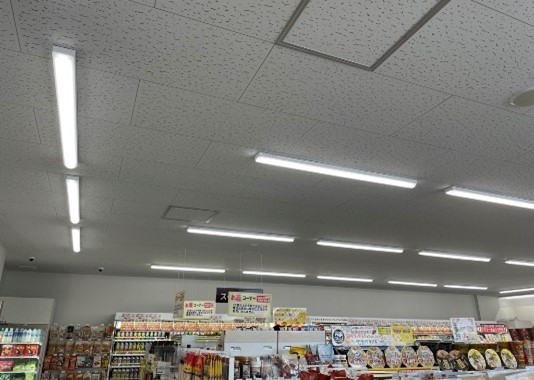
Energy conservation Six key points for energy conservation measures (SEJ)
|
|
Generation of renewable energy Installation of solar panels
|
||
|
Procurement of renewable energy Procurement through off-site PPA*
|
||
|
Establishment of retail electricity supplier Seven & i Energy Management Co., Ltd. was established in August 2024. |
||
|
Introduction of EV charging stations As of the end of December 2024, a total of 180 charging stations has been installed at 53 stores in eight states and two Canadian provinces (SEI).
|
||
| Warming scenario |
・Develop a contingency plan to be followed during severe weather events such as floods and storms
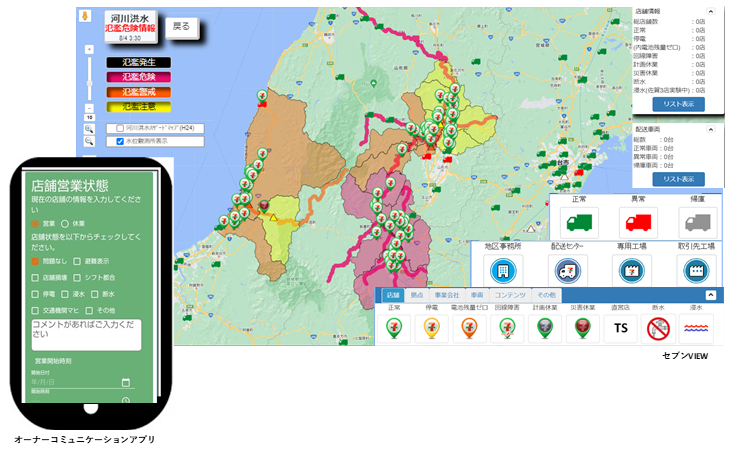
・Establish a system for information gathering and early recovery in the event of a disaster (such as 7VIEW)
・Ensure stable procurement by expanding procurement sources, such as vegetable plants and land-based fish farms
・Promote energy saving and install energy-saving equipment in stores
・Expand delivery and e-commerce services |
7VIEW Visualization of store status and logistics on Google Map
|
|
Procurement of factory-grown vegetables Increasing purchase of climate-resistant raw materials |



- * An abbreviation for off-site corporate power purchase agreement (PPA), a mechanism in which renewable energy sources, such as solar power generation facilities, are installed off-site a company for the provision of renewable energy power.
- For details, please refer to “4.2.2 Countermeasures” (p. 13) in the “CLIMATE and NATURE Disclosures, Integrated report based on TCFD/TNFD recommendations.”
- Click here for more information on climate change countermeasures
(4)Nature
The Group utilizes and also impacts nature, both directly and indirectly, throughout its entire value chain. For example, the procurement of raw materials in upstream supply chains relies on various benefits from nature, such as abundant water resources for cultivation and pollinators. Additionally, excessive resource extraction and over-application of agricultural chemicals and fertilizers can have detrimental impacts on nature. Furthermore, concerns are growing that changes in nature may impact business, including difficulties in procuring and using raw materials.
To maintain business operations over the medium to long term, we believe it is critical to understand and manage the interactions between business and nature. This involves minimizing the negative impacts of business activities on nature and promoting nature-positive initiatives to halt and reverse biodiversity loss.
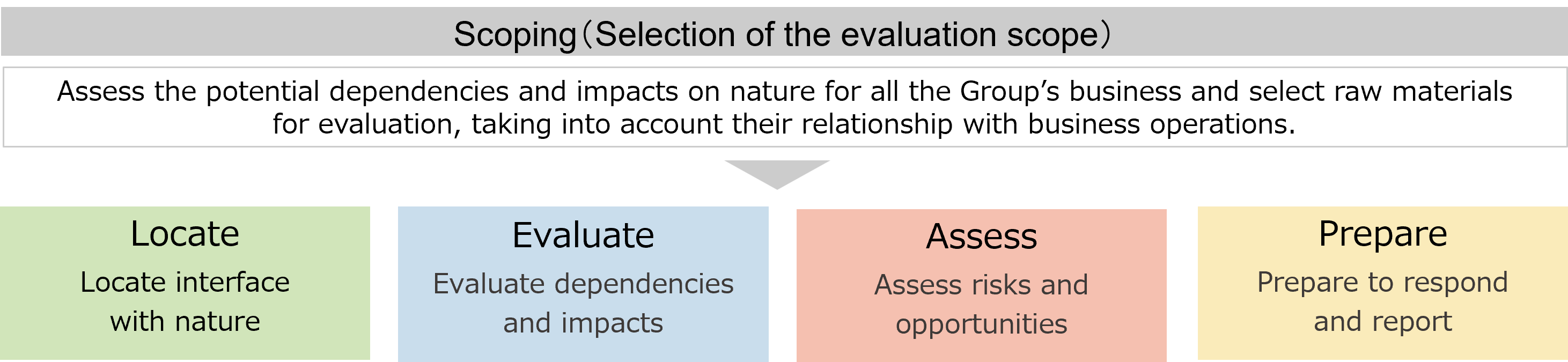
1. LEAP Approach
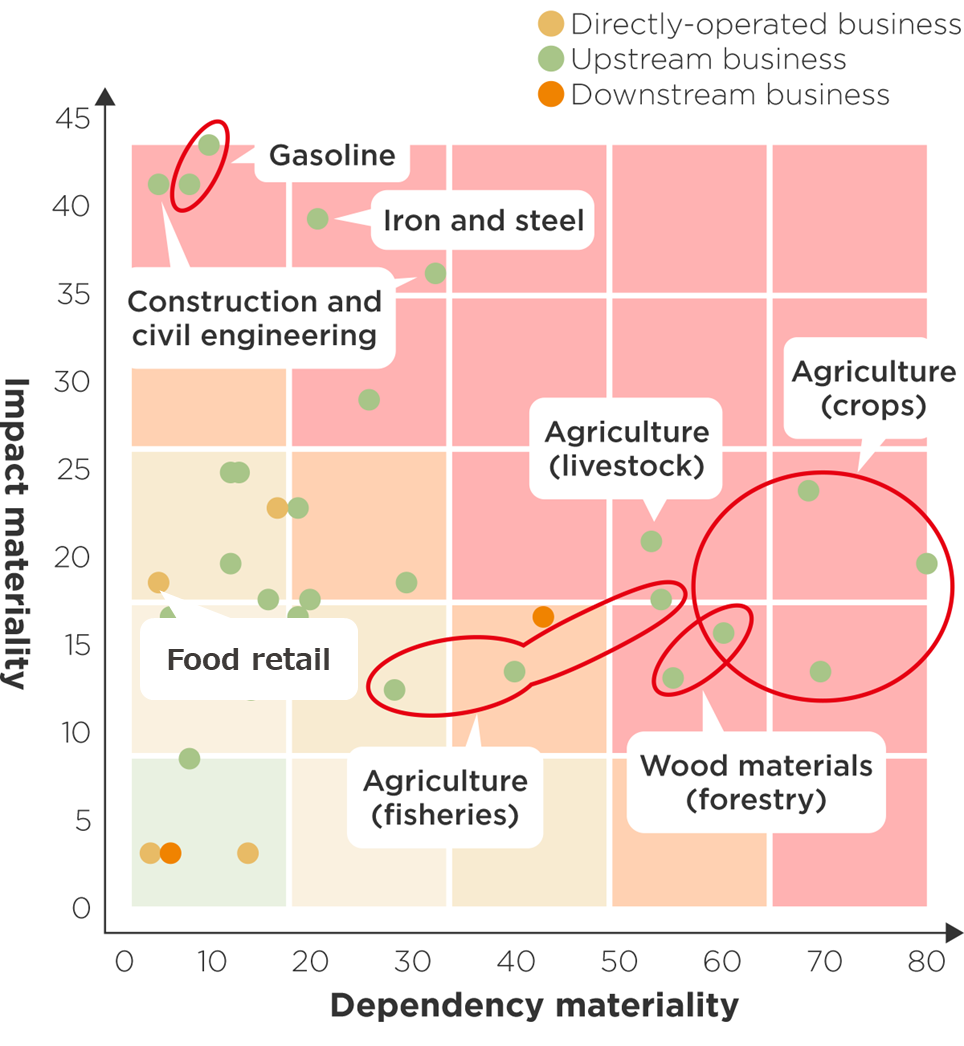
We assessed nature-related dependencies, impacts, risks, and opportunities within the Group in accordance with the scoping assessment method and LEAP approach recommended by the TNFD.
●LEAP approach
2. Scoping
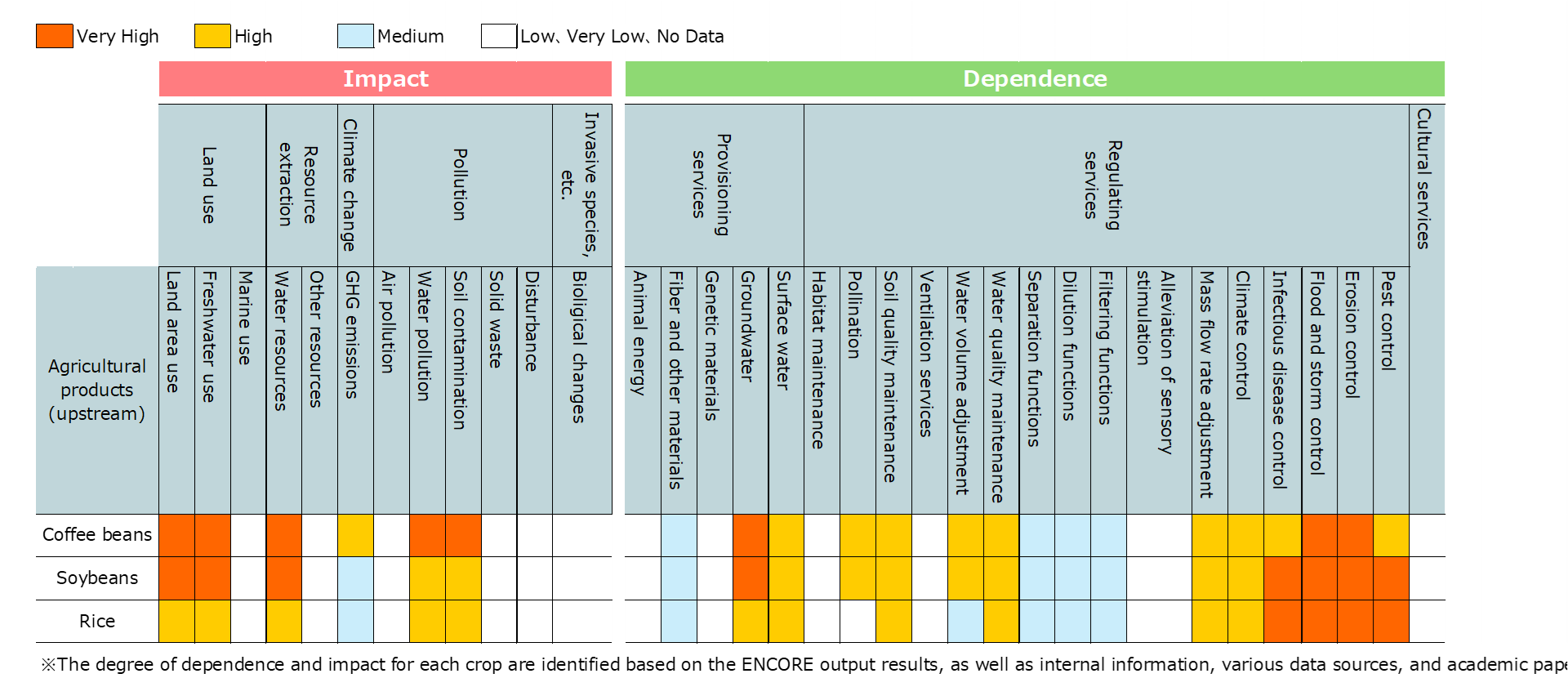
●Evaluation of dependencies and impacts on nature of the three raw materials selected as key
3. Analysis of Coffee According to the LEAP Approach
| Analysis of coffee according to the LEAP Approach | ||||||||||||||||||
| ●Locate (locate interface with nature) | ||||||||||||||||||
|
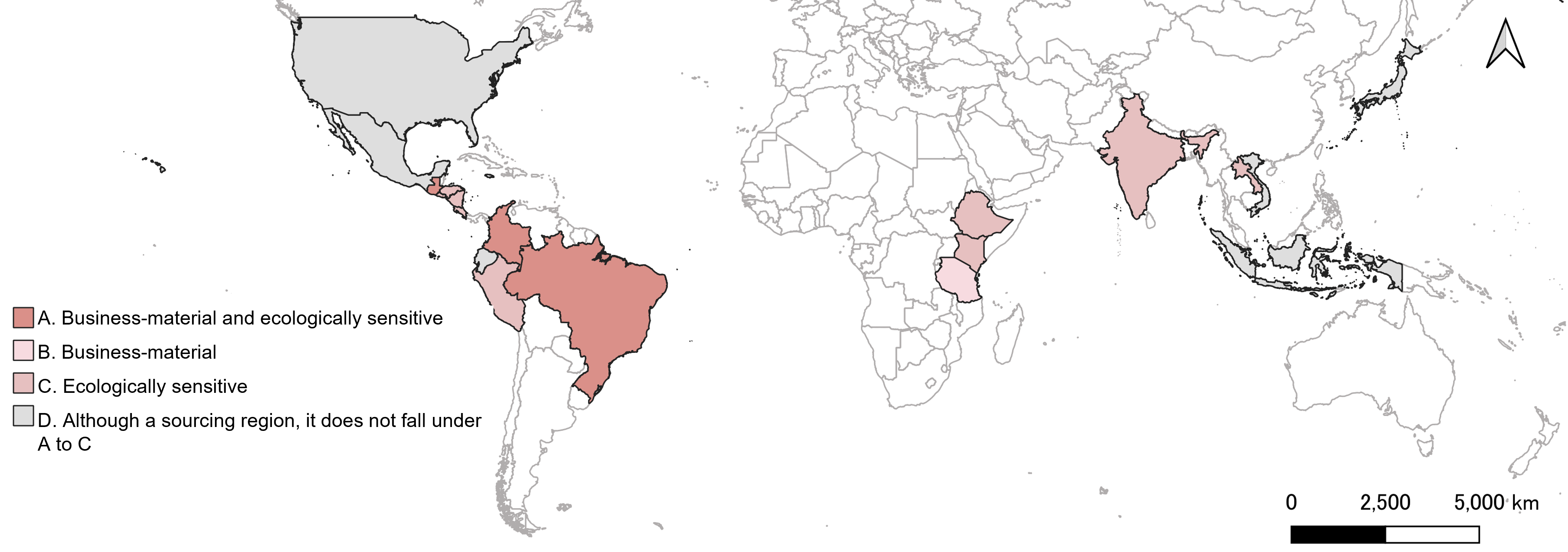
We evaluated and organized countries from which SEJ, SEI, and SEVEN PREMIUM source coffee beans along two axes: ecological sensitivity and business materiality. Of these, we have identified three countries—Brazil, Colombia, and Guatemala—as sourcing regions that meet both of these criteria and should be given particular priority for analysis.
■Map of priority analysis sourcing regions for coffee beans
|
||||||||||||||||||
| ●Evaluate (evaluate dependencies and impacts) | ||||||||||||||||||
|
We used data from SEJ, which has the highest sourcing volume, to investigate the dependence on and impact on nature of the top five countries with the highest sourcing ratios by country (Brazil, Colombia, Tanzania, Guatemala, and Ethiopia). Items to be investigated were determined by referencing results of ENCORE and information compiled by TNFD and SBTN, and include an evaluation of general dependencies and impacts of coffee, as well as sorting through the ecological and business characteristics of each sourcing region.
|
||||||||||||||||||
|
●Assess (assess risks and opportunities) |
||||||||||||||||||
|
Based on knowledge acquired from business partners, we organized the risks and opportunities relating to dependence and impact on nature. We also conducted analyses on the agricultural cooperative and farm levels concerning decreasing coffee bean yields, which is believed to have the greatest impact.
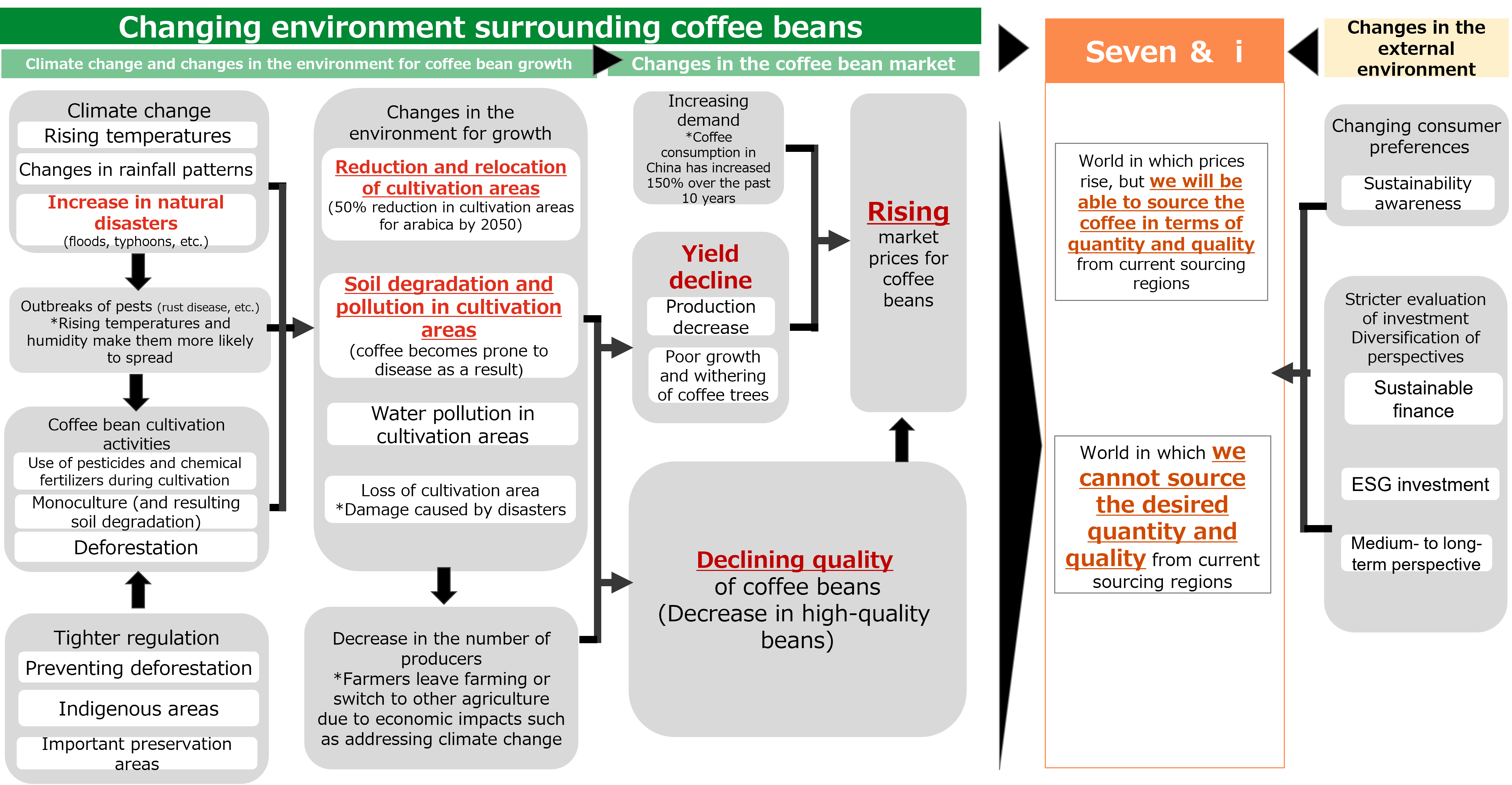
■The external environment surrounding coffee beans
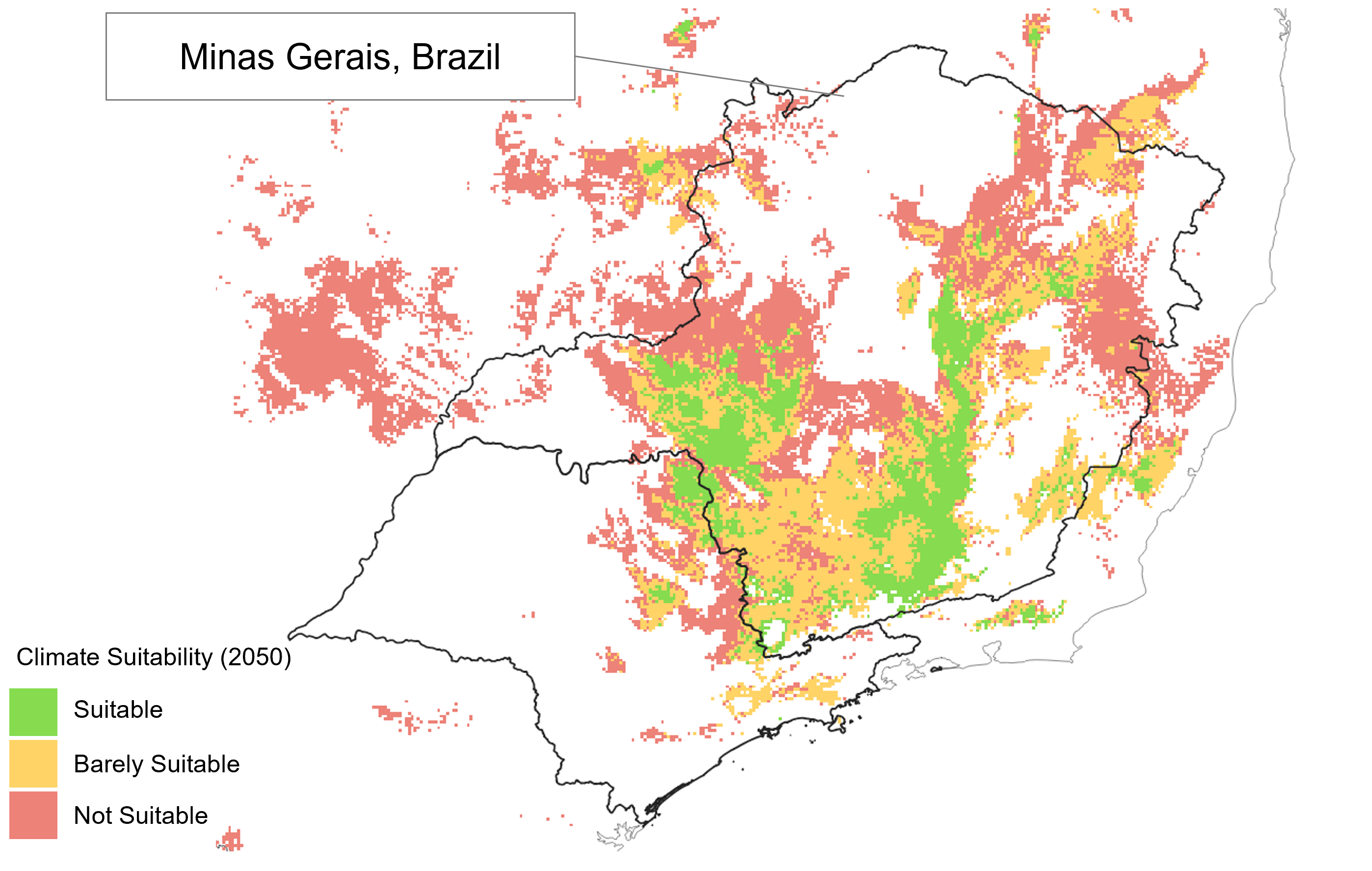
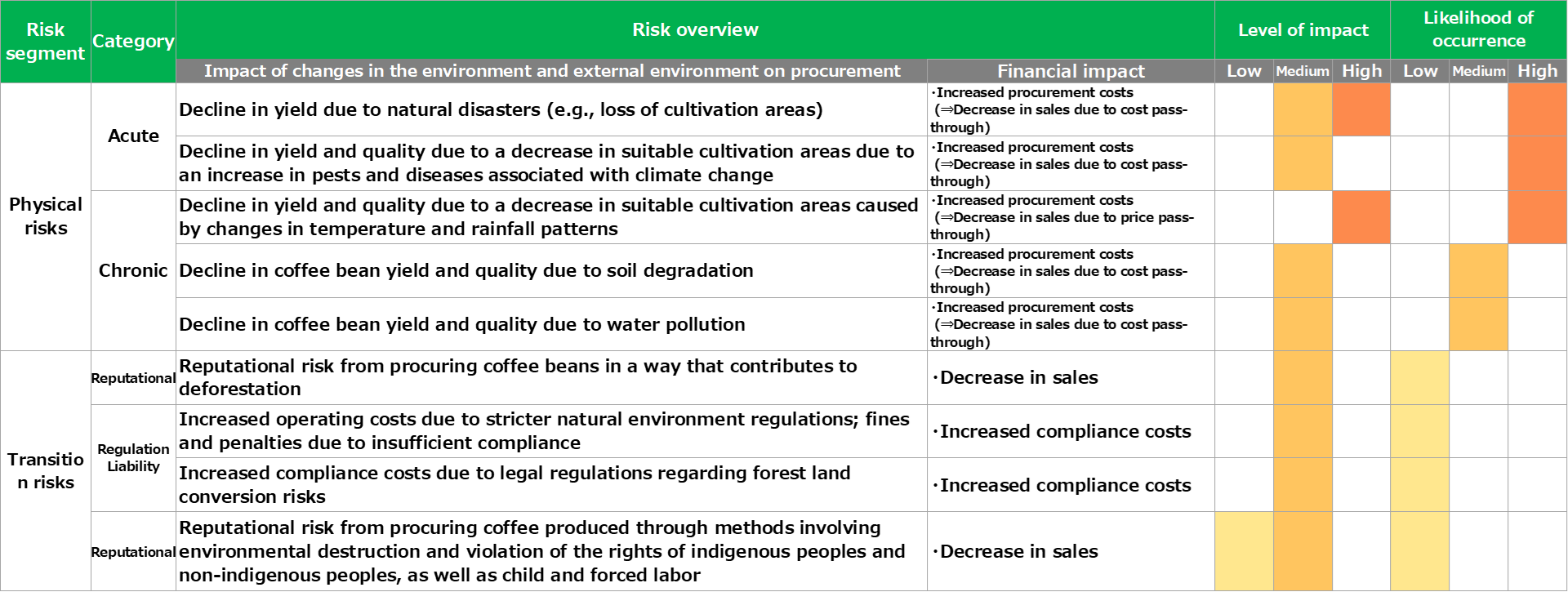
After analyzing the risks and opportunities for coffee beans based on the organization described above, we found that there is a particularly high risk of reduced yields due to shrinkage and changes in areas suitable for cultivation caused by rising temperatures and changes in rainfall patterns. Other risks identified include a decline in quality and yield due to outbreaks of pests and diseases, the cost of complying with environmental regulations, and reputational damage due to procuring coffee that is produced using methods that involve environmental destruction or infringing on IPLCs land rights. Therefore, using climate suitability, which indicates the degree to which climatic conditions are suitable for coffee bean production, we analyzed the five countries with high sourcing rates for SEJ, tracing back to the agricultural cooperative and farm levels. Results of the analysis show that across the five target countries, area suitable for growing coffee beans is expected to decrease by roughly 30% between now and 2050. Furthermore, an analysis at the state level where sourcing regions are located revealed that suitable area could potentially decrease by about as much as 40% in some states. Based on the risks identified by tracing back to the agricultural cooperative and farm levels, we will consider and carry out specific measures that include providing support to our suppliers.
■ Simulation of climate suitability in Minas Gerais in 2050
■ List of nature-related risks for coffee beans
Furthermore, we estimated the impact of such yield reduction risks on SEJ under two external environmental scenarios: 1) Coffee bean prices rise, but we are able to continue sourcing the quality and quantity we require from our current sourcing regions; and 2) Coffee beans of the quality and quantity we require can no longer be sourced from our current sourcing regions. This is an estimate based on currently available data on climate change, and accuracy of the estimate must be further improved. However, we believe that an estimate of the monetary impact will prove to be useful information in considering countermeasures within the Company.
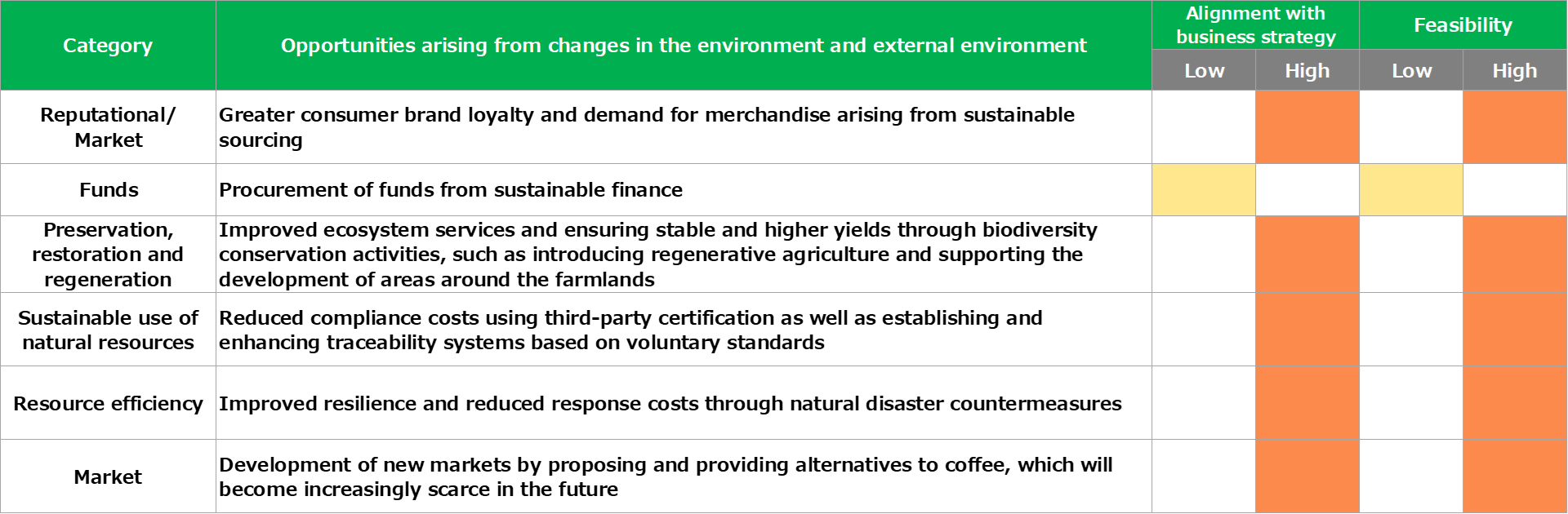
As opportunities, we identified increasing consumer brand loyalty through sourcing coffee beans with lower environmental impact, and improving resilience through the implementation of natural disaster countermeasures. We hope to take advantage of these opportunities in the context of countermeasures.
■ List of nature-related opportunities for coffee beans
|
||||||||||||||||||
|
●Prepare (prepare for response and reporting) |
||||||||||||||||||
|
Based on the risks and opportunities identified in the Assess phase, we determined the direction for measures. To ensure sustainable sourcing and increase business resilience, we recognize the need to consider direction for measures and prioritize measures based on future scenarios and characteristics of risks in each region. Alongside offering meticulous support to current production areas in addressing challenges they face, we believe it is necessary to take on a long-term approach, such as developing new suppliers, keeping in mind that climate change may turn areas unsuitable for cultivation and make it impossible to continue cultivation there. In addition, we will further strengthen collaboration with stakeholders going forward and advance initiatives that contribute to sustainability of coffee bean sourcing as well as that of the global environment and communities.
■Direction for measures
|
4. Analysis of Rice According to the LEAP Approach
| Analysis of rice according to the LEAP Approach | ||||||||||||||||||
| ●Locate (locate interface with nature) | ||||||||||||||||||
|
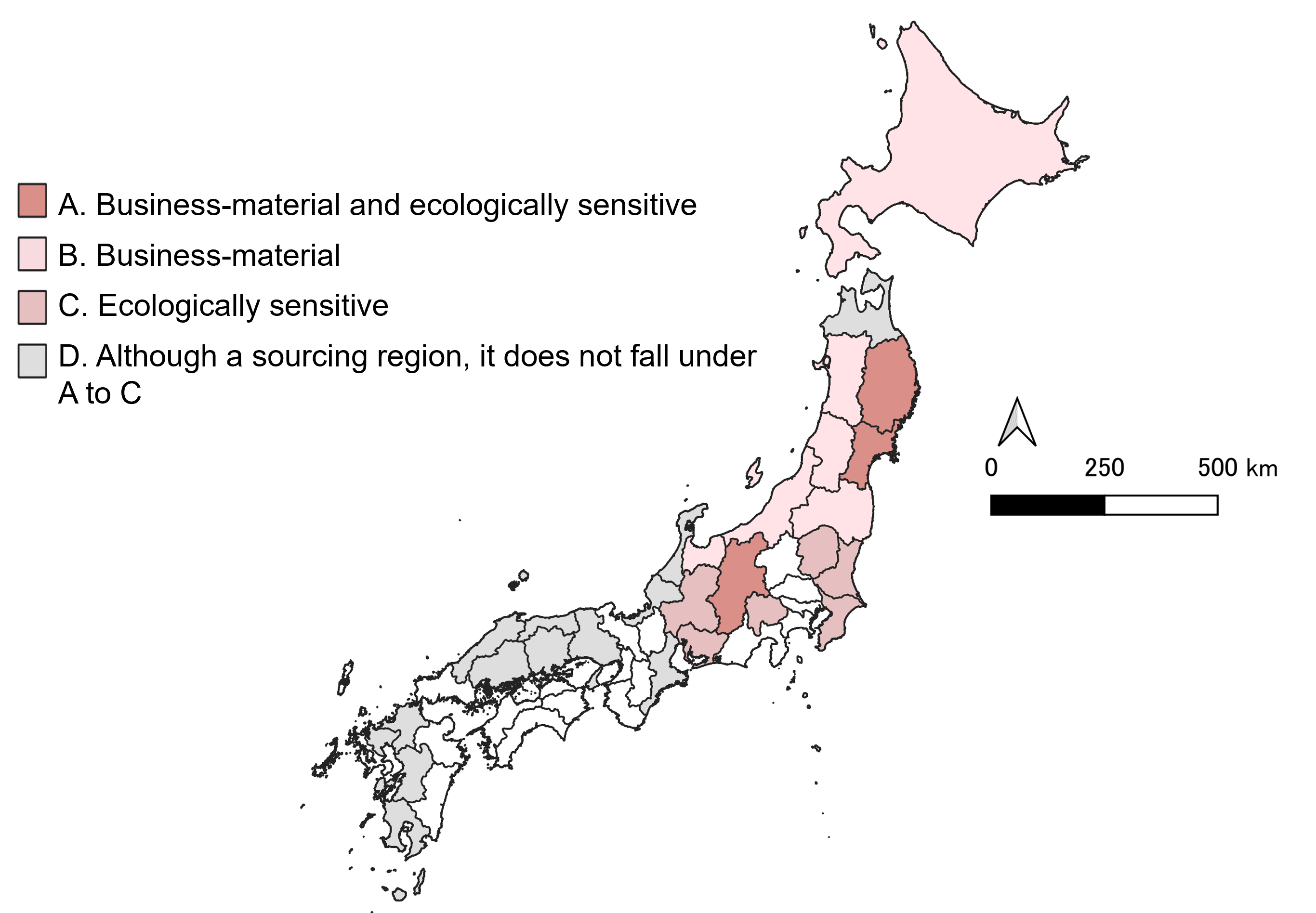
We analyzed the rice sourcing regions of SEJ, which has the highest sourcing volume, at the prefectural level and evaluated them based on two axes: ecological sensitivity and business materiality.
■Map of priority analysis sourcing regions for rice
|
||||||||||||||||||
|
●Evaluate (evaluate dependencies and impacts) |
||||||||||||||||||
|
Next, based on the ENCORE score, TNFDʼs sector-specific guidance (food and agriculture sector, beverages sector), and SBTN’s High Impact Commodity List*, we extracted the influencing factors and ecosystem services that should be focused on for rice, and looked for the dependencies and impacts on nature of producing areas on a prefectural basis.
* High Impact Commodity List: A list provided by SBTs for Nature of raw materials that are considered to have significant environmental impacts |
||||||||||||||||||
| ●Assess (assess risks and opportunities) | ||||||||||||||||||
|
Using dependencies and impacts on nature evaluated in the Evaluate phase and conducting a simple external environmental analysis of rice production, we determined paths leading from dependencies and impacts on nature to risks and opportunities.
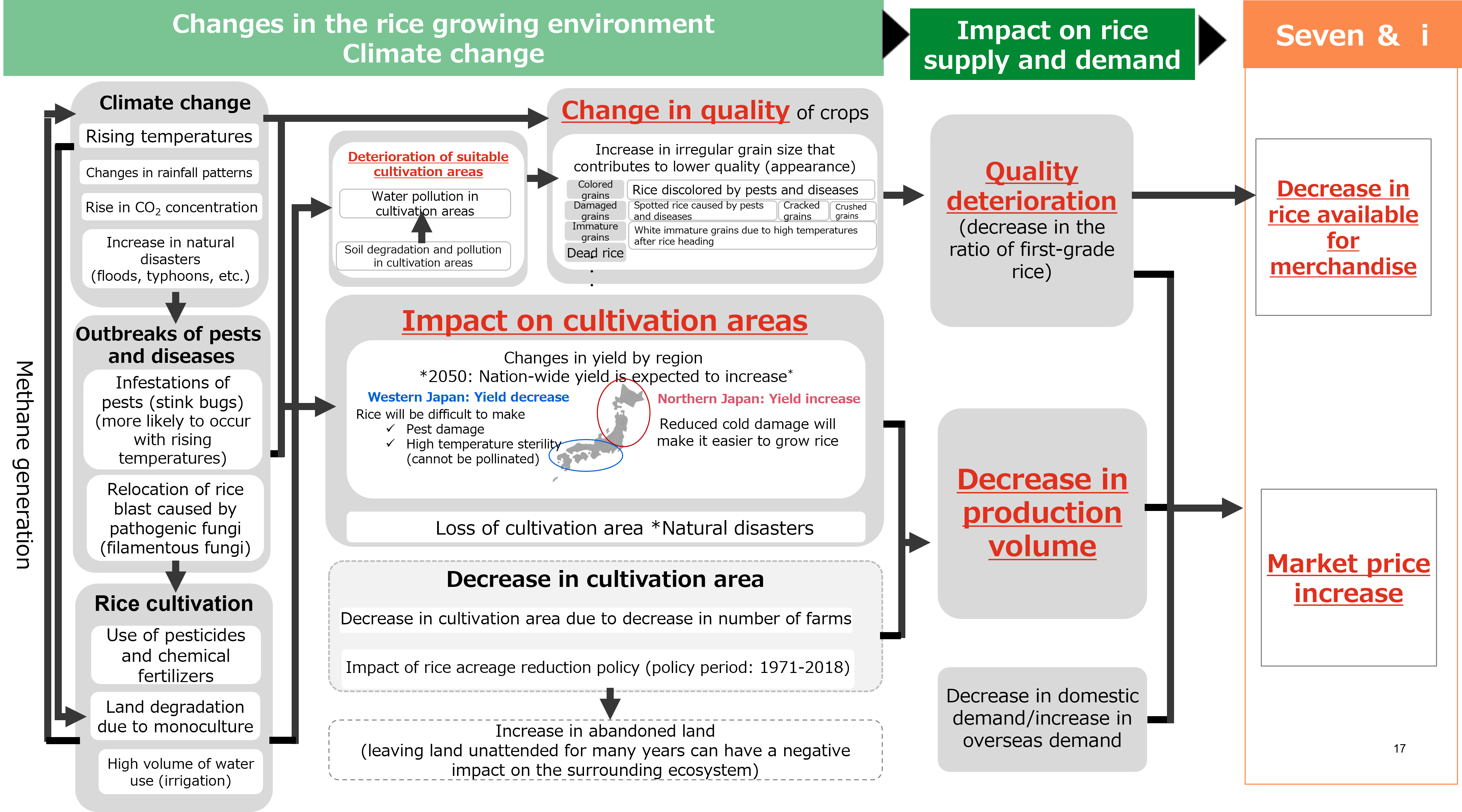
■The external environment surrounding rice
* Source: Ishigooka, Y. "Revision of estimates of climate change impacts on rice yield and quality in Japan by considering the combined effects of temperature and CO2 concentration"
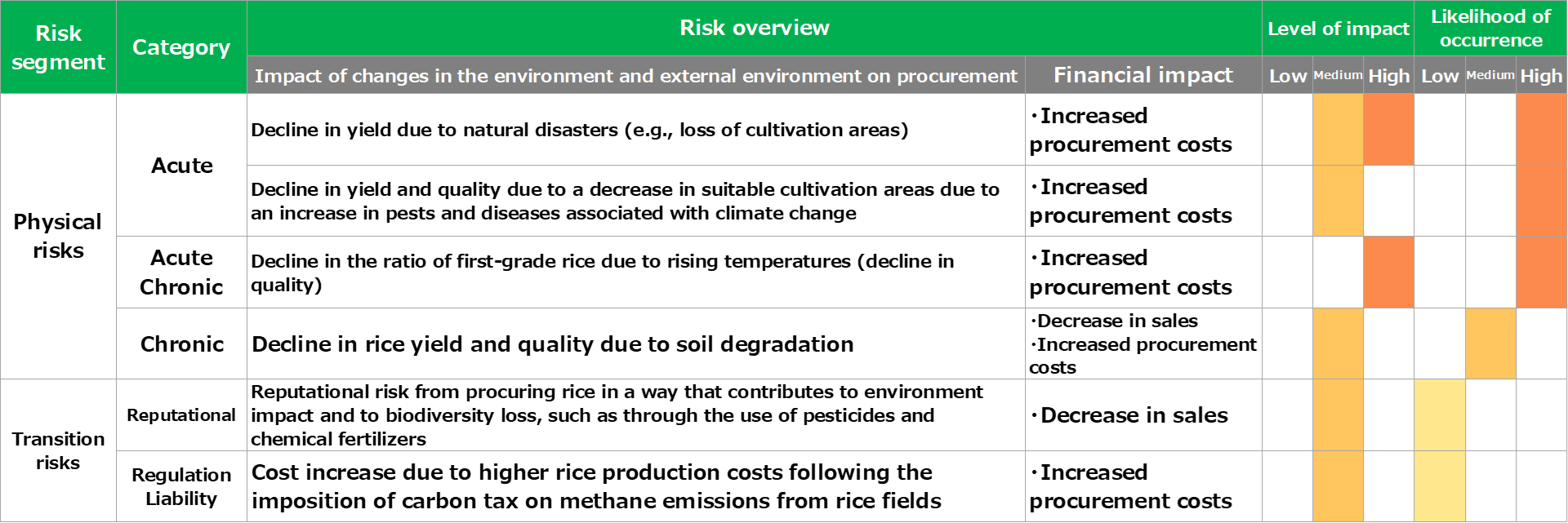
As a result of analyzing the risks and opportunities for rice based on the above, we recognized that rising temperatures and changes in rainfall patterns will lead to a decline in the ratio of first-grade rice, and that outbreaks of pests and diseases will pose a risk of decline in rice quality. Of the risks, we have determined that the most significant risk for rice, from the perspective of sustainability of the Groupʼs business, is the decline in rice quality (ratio of first-grade rice).
■ List of nature-related risks for rice
Also, using future projections for the ratio of first-grade rice as reference, we estimated the financial impact that a decline in the ratio of first-grade rice would have on SEJ, using the upper limit (a large decrease) and lower limit (a small decrease) of the future decline that can be expected in the ratio of first-grade rice. As this estimate focuses only on factors related to quality decline, it does not take into account fluctuations in the volume of rice production volume itself, which is likely to be affected by government policy, or temporary declines in quality due to extreme weather. Thus, accuracy of our estimates will need to be improved, but we now have a quantitative grasp on the importance of risks associated with rice sourcing as material to be used for internal discussion.
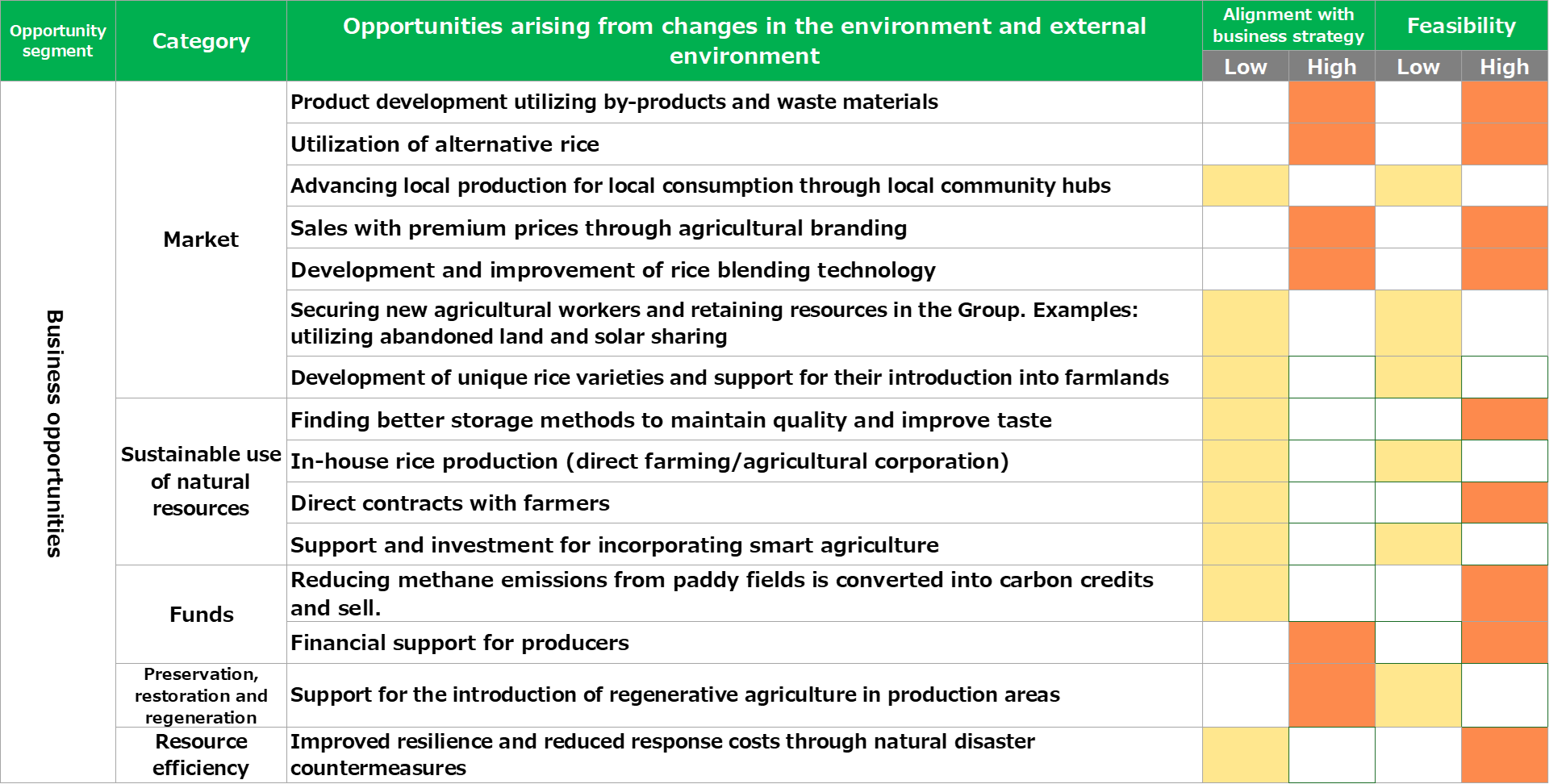
Regarding opportunities, we were able to identify opportunities by collaborating with and supporting producers and through the introduction of new technologies, product development, and other means.
■Nature-related opportunities surrounding rice
|
||||||||||||||||||
| ●Prepare (prepare for response and reporting) | ||||||||||||||||||
|
Based on the risks and opportunities identified in the Assess phase, we determined the direction for measures. To ensure a stable supply of rice well into the future, we believe it is important to assist producers incorporate new farming methods and improve rice varieties, which take time for results to show. Further, we view the export and import of rice and various social backgrounds as factors that should be taken into account when considering measures. We will continue holding dialogue with producers and business partners as we proceed in considering measures.
■Direction for measures
|
(5)Transition Plans
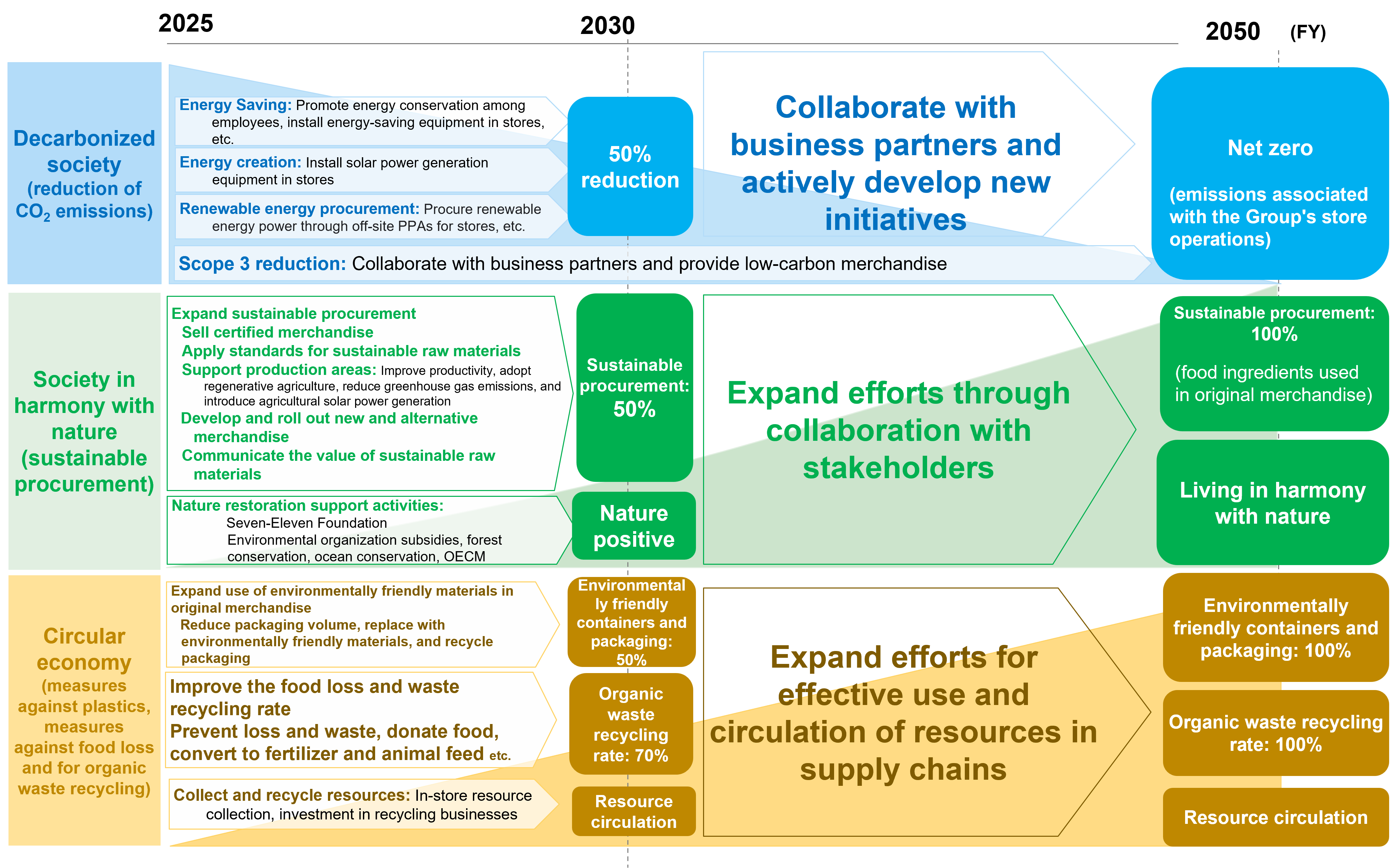
We are creating a transition plan based on the GREEN CHALLENGE 2050 environmental declaration to facilitate the transition to a decarbonized society, circular economy, and society in harmony with nature. Going forward, we plan to refine this into an effective transition plan by making reference to official guidelines on transition plans that the TNFD plans to release and adopting a comprehensive perspective that considers interrelationships, including mutual trade-ons and trade-offs, among climate change, nature, and resource circulation.
● Transition plan for 2050
- For details, please refer to “4.4 Transition plans” (p. 29) in the “CLIMATE and NATURE Disclosures, Integrated report based on TCFD/TNFD recommendations.”
- Climate transition plan: Click here to see our initiatives for climate change countermeasures
- Nature transition plan: Click here to learn more about our sustainable procurement efforts
For more information about the Seven-Eleven Foundation, click here. (Japanese Only) - Resource circulation transition plan: Click here for information on food loss and organic waste recycling initiatives
Click here to learn about our efforts to make effective use of resources
Click here to learn about our efforts to introduce environmentally friendly containers and packaging
5. Metrics and Targets
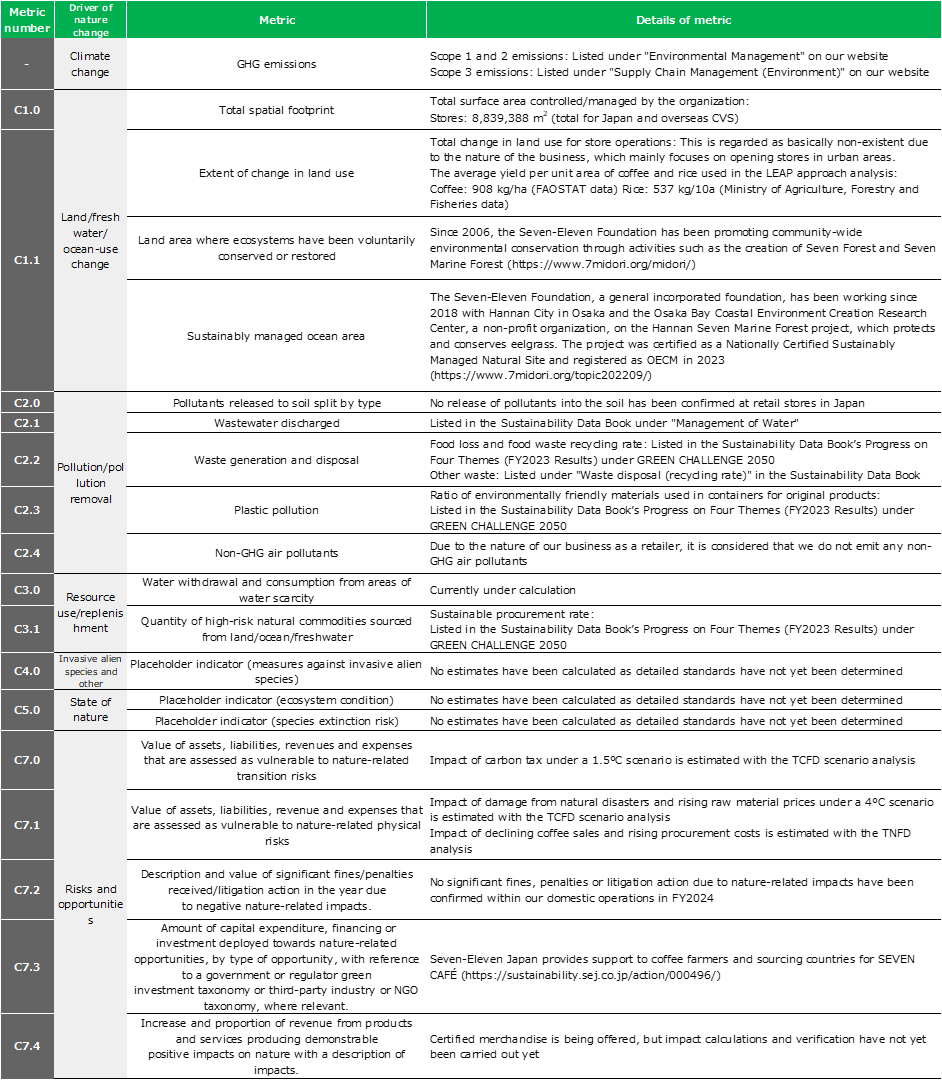
In our GREEN CHALLENGE 2050 environmental declaration, which we established in 2019, we defined goals and visions for 2030 and 2050 in four fields—reduction of CO2 emissions, measures against plastic, measures against food loss and for organic waste recycling, and sustainable procurement—and are now managing progress. Also, among the core global metrics indicated by the TNFD, we are promoting the collection and disclosure of data as metrics, starting with those indicators for which data is available, in consideration of the Group’s dependencies, impacts, risks, and opportunities. Going forward, we will endeavor to collect and disclose data on nature-related metrics, particularly by seeking cooperation from stakeholders in our value chains.
●Core global metrics